




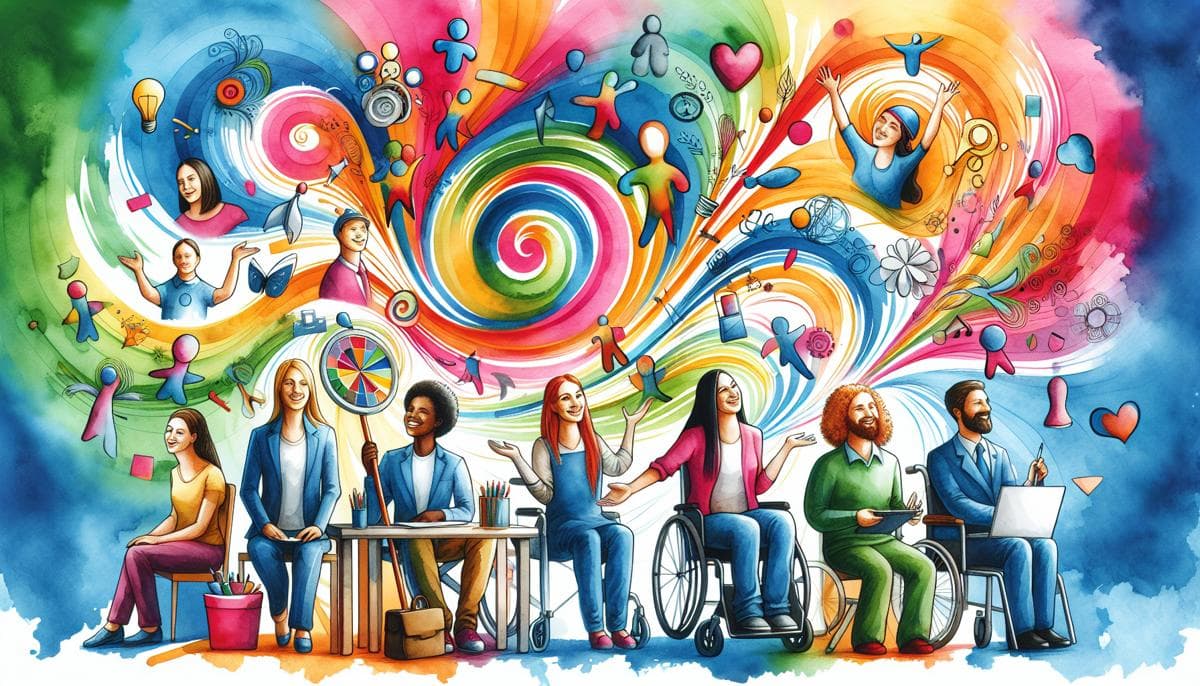
Battling Discrimination: Winning Moves for Persons with Special Needs in the Workforce
Surviving the Workplace: Strategies to Tackle Discrimination For People with Special Needs
The workforce landscape is a challenging arena for everyone. However, individuals with special needs can often face an amplified struggle due to discriminatory practices. In our pursuit of an inclusive and equitable world, it is essential to discuss these struggles openly and highlight strategies that can help individuals with special needs manage and confront discrimination.
Recognizing Discrimination
Identifying discrimination is the first step toward resolution. Discrimination can surface in various forms, including disparities in pay, opportunities, and unfair treatment due to one's disability rather than their merits. Employers are legally obliged to provide reasonable accommodations aiding individuals with special needs to perform their jobs. Failure to do so constitutes discrimination.
Acknowledging Your Rights
Knowledge is the best defense against discriminatory practices. Understanding your rights is of prime importance. These rights are enshrined in legislation, most notably the Americans with Disabilities Act (ADA). The ADA prohibits discrimination against people with disabilities in all areas of public life, including employment. This means that employers can't refuse to hire, unduly dismiss, or inappropriately treat an employee based on their disability.
Addressing Discrimination Hopefully
Combatting discrimination requires a multilevel approach that consists of both individual and organizational solutions. On a personal level, building resilience is paramount. Resilience can be fostered by networking with others who have similar experiences, thereby forming a supportive community to champion one other. Secondly, seeking professional advice, such as career counseling or legal consultation, can help decipher the intricacies of bureaucratic systems.
On an organizational level, companies should adopt clear policies that prohibit discriminatory practices, provide appropriate training for all staff and managers, and promote a culture of inclusiveness.
Innovations in Assistance Technology
In the world of inclusion, technology has become an empowering force. Innovations in hearing assistance technology have created avenues that weren't possible previously. Tech advancements such as assistive listening devices (ALDs) and cochlear implants have revolutionized the way individuals with hearing impairment interact with the world, profoundly impacting their employment opportunities.
For instance, ALDs, which include amplified telephones, TV listening systems, and personal amplifiers, reduce background noise, making it easier for individuals with hearing loss to communicate effectively. Similarly, cochlear implants have provided many individuals with severe to profound hearing loss the opportunity to perceive sounds, which can be critical in several job roles.
Consequently, harnessing these innovations can aid in countering employment discrimination. It is essential for employers to understand and appreciate the capabilities these technologies bring to their workforce. They also need to ensure accessibility to these assistive technologies for their employees.
Committed to a Better Future
While discriminatory practices still loom large, dedicated efforts from individuals, communities, companies, and countries as a whole are slowly turning the tide. Gradual progress is being made towards a more inclusive and equal world where a person's abilities, rather than their special needs, define their professional path. We are in this together, and together, we will build a future where each one of us will not just survive but thrive in the workplace.

