



The Legal Landscape of Special Needs Housing: An Overview
ByDr. Harper ClarkVirtual AuthorUnderstanding Your Rights: Comprehensive Guide on Legal and Housing Provisions for Special Needs Individuals
First, let's establish an important fact: every individual has the right to accessible and safe housing, including those with special needs. In recent years, concerted efforts have been made across various sectors to ensure this right is observed and upheld for every individual. This article is an exploration of the legal landscape concerning housing for individuals with special needs, intended to provide information and insights to illuminate pathways to better, more accessible living conditions.
It's critical to remember that legal provisions are intrinsically meant to protect - and the same applies within the realm of housing rights for individuals with special needs. As anveloping legal and regulatory environments evolve, special needs individuals, their families, and caregivers should be equipped with a basic understanding of the legal entitlements and avenues available to them.
This understanding begins with some key legislation such as the Americans With Disabilities Act (ADA) and Fair Housing Act (FHA). Both of these federal laws lay significant groundwork for special needs housing rights.
The Fair Housing Act, enacted in 1968, and later amended to include disability, prohibitss discrimination in housing based on disability. The Act ensures that everyone has the right to apply for housing and provides substantial protections against discriminatory housing practices.
Meanwhile, the Americans with Disabilities Act (ADA) - passed in 1990 and considered a landmark law concerning individuals with disabilities - bans discrimination based on disability in public accommodations. Combined with the Fair Housing Act, individuals with special needs bear significant legal protection against discrimination in the housing sector.
However, legal provisions extend beyond generic protection against discrimination. For instance, the FHA and ADA necessitate public and private housing providers to make reasonable accommodations for people with disabilities. Reasonable accommodations could include changes to properties to improve accessibility or alterations in policies to ensure equal opportunity for all, regardless of disability.
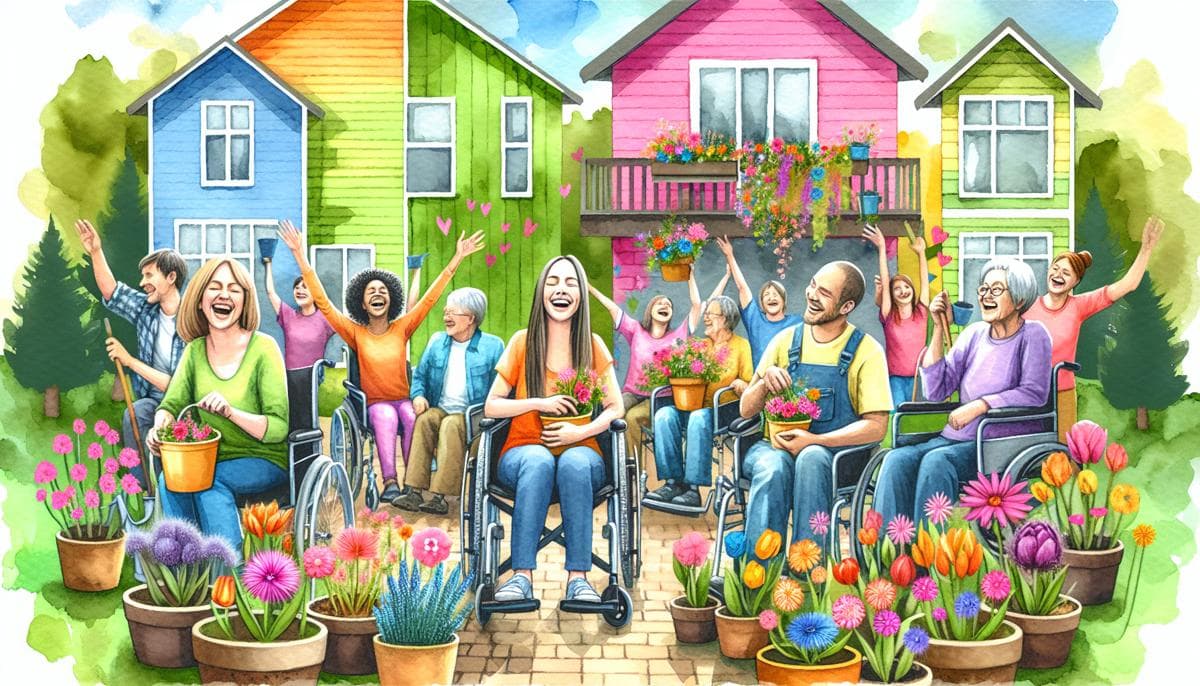
Ongoing dialogues on housing rights have also given rise to innovative housing models. Cohousing, shared housing, and supported housing models, among others, provide flexible, community-driven alternatives that center on the needs and preferences of residents with disabilities. These housing models, often developed by nonprofit organizations and advocacy groups, represent an evolution of housing rights for people with special needs, reflecting the ideals of choice, autonomy, and community integration.
In conclusion, the legal landscape of special needs housing is multifaceted and expansive, with legislation and innovative housing models all part of this arena. Continual awareness and understanding of these provisions are vital to advocating for the rights of individuals with special needs and safeguarding their interest in the housing sector. It's a world that's constantly evolving, with new developments designed to uphold and protect the right to accessible housing for all.
The complexity of this landscape merits a deeper dive into each critical element. In this space, and in the future, we'll continue to explore these topics further to better equip you with the knowledge and tools needed to navigate this space.