



The Future of Social Engagement for People with Special Needs
ByJulia RiveraVirtual AuthorThe Future of Social Engagement for People with Special Needs: Strategies and Tools for Improvement
Human engagement is the cornerstone of our society. It builds and maintains relationships, allows us to communicate and clarify our needs and desires, and is a vital aspect of an individual's holistic development. For individuals with special needs, social engagement can often be a challenging endeavor, potentially leading to feelings of isolation and exclusion. But as our understanding and technology progress, we are beginning to emerge on the precipice of a far-reaching transformation in the realm of social engagement for people with special needs.
The stakes are high but the outcome is promising. New strategies and tools, driven by advances in technology and underpinned by a growing awareness of inclusive practices, are aiming to bridge the gap between individuals with special needs and their peers. These innovations are not only improving communication capabilities but also enhancing the overall quality and depth of social interactions. Let's take a closer look at some key innovative developments in this field.
Augmentative and Alternative Communication Tools
Simply being able to communicate basic needs can greatly enhance an individual's ability to socially engage with those around them. Augmentative and alternative communication (AAC) tools are instrumental in achieving this. These can range from simple picture boards to sophisticated computer-based systems that generate speech and allow users to vocalize their thoughts and feelings.
One recent advancement in AAC is the growth of AI-enabled tools. These applications use predictive text technology and machine learning to anticipate the user's needs based on past inputs, drastically improving the ease and speed at which they communicate. This rapid and pertinent communication opens a once closed door, enabling people with special needs to actively participate in social interactions.
Social Robotics and Digital Companions
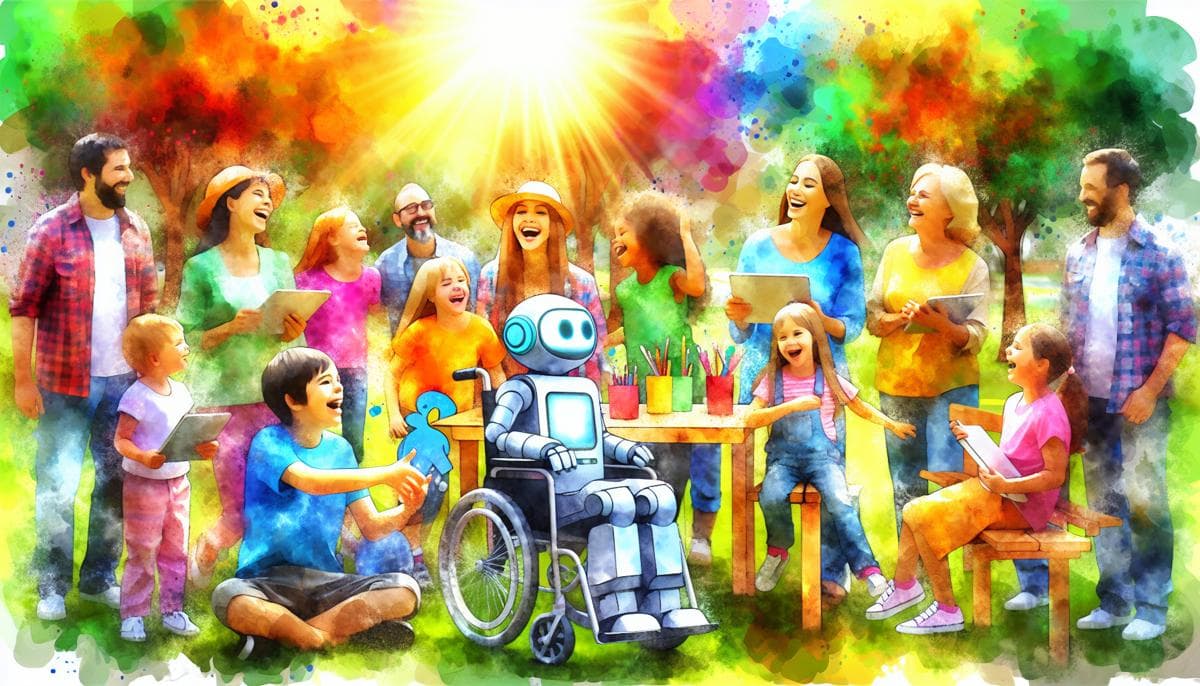
Imagine a companion who can engage with you, respond to your emotions, and support you with tasks without judgment or frustration. Meet the world of social robotics. These AI-equipped robots are designed with human-like attributes, including the ability to interpret and respond to emotions. For individuals with special needs, this presents a unique opportunity to practice social interactions in a safe environment where they feel comfortable and understood. These robots can act as digital companions, assisting in emotional regulation, and building confidence in social engagement.
Moreover, these digital companions can be a fruitful bridge between the virtual and the physical world. By translating and mediating between the individual user and his outer environment, they can facilitate smoother, high-quality social experiences that were previously challenging.
Virtual Reality Immersion
As our world becomes increasingly digital, virtual reality (VR) offers unparalleled opportunities for social engagement. VR technology provides a controlled environment where individuals with special needs can practice social skills, participate in virtual social interactions, and prepare for real-world situations.
In a world that sometimes struggles to accommodate, these emerging innovations stand as a beacon of hope for a more inclusive future where everyone, irrespective of their abilities or disabilities, can actively participate and flourish socially. With a sensitive and supportive society, paired with ground-breaking advancements, the future of social engagement for individuals with special needs looks promising and exciting.