

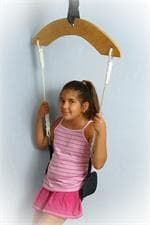
Sensory Integration Through Swings
BySpecialNeeds.com EditorSensory integration refers to the means of processing incoming stimuli from our bodies and our environment. Our senses work together to give us an idea of ourselves and our place within an environment. For most people, sensory integration happens without us realizing it, but it can be more difficult for individuals with special needs, such as autism. Certain therapeutic tools have emerged as a means of helping individuals with sensory processing disorders.

Swings, such as the platform swings from Sensory Goods, might seem like simply a fun pastime, but they are excellent tools for improving concentration and vestibular movement. Vestibular therapy works by having a child produce motions that cause a dizzy sensation, while asking the child to concentrate on body position and movement. This process helps the brain develop and compensate for the loss of balance.
Platform swings are large boards, usually covered with carpet or other soft material. Ropes that hang from the ceiling are connected to the boards, which allow repetitive swinging motion. This action can create a calming sensation for a child, especially if he is overstimulated, in addition to improving the functioning of the body's vestibular system.
Sensory Goods also developed a "Bouncin' Swing," which helps build muscle tone as well as improvement of vestibular and proprioceptive systems. Proprioceptive senses include the sensory input and feedback from muscles and the body. The seat of the Bouncin' Swing is made of denim, and it is attached to the top of the swing with heavy-duty rope. This swing is very durable; the standard version can handle up to 100 pounds, and the heavy-duty version holds up to 150 pounds.

The Bouncin' Swing can help with the following functions:
- Motor Planning: understanding and figuring out which parts of the body should move to complete a task
- Motor Control: utilizing the proper limbs and muscles and making the body perform a given task
- Grading Movement: deciding how much pressure is needed for a given task
- Postural Stability: maintaining posture and giving a sense of security in movements
Many physical and occupational therapy rooms often include swings, and even some classrooms, especially those specializing in autism or other sensory processing disorders, will utilize these tools. If your child has a sensory processing disorder, consider purchasing a swing for home use.
Photos by Sensory Goods and tanya_little