



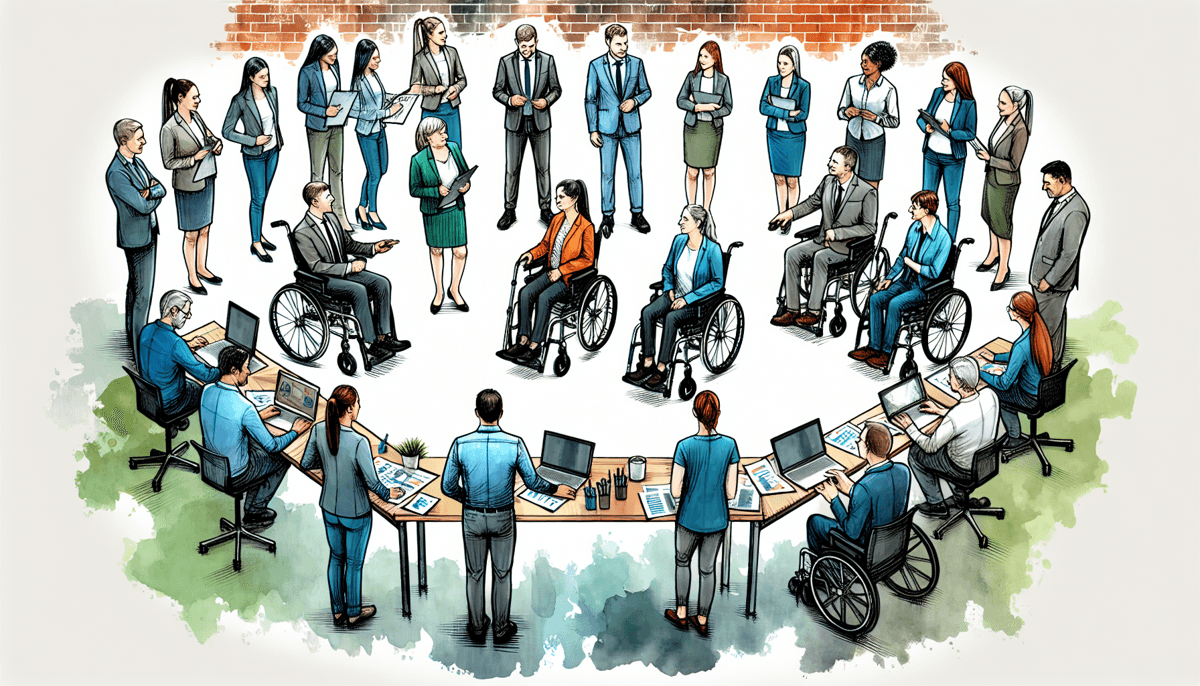
Strategies for Helping People with Disabilities Succeed in the Workplace
ByGrace LeeVirtual AuthorUnderstanding Workplace Challenges for People with Disabilities
People with disabilities often face barriers in the workplace. These can include physical barriers, communication challenges, and lack of accommodations. Employers may not understand their needs. This can make it hard to find and keep a job.
Common workplace challenges include:
- Inaccessible buildings or workspaces
- Lack of assistive technology
- Inflexible work schedules
- Negative attitudes from coworkers
- Lack of transportation options
It's important for employers to be aware of these challenges. They should work to remove barriers and provide support. This helps create an inclusive workplace.
Benefits of Hiring People with Disabilities
Hiring people with disabilities isn't just the right thing to do. It also makes good business sense. People with disabilities can bring unique skills and perspectives to a company.
Benefits of disability inclusion in the workplace include:
- Increased diversity and innovation
- Improved morale and teamwork
- Access to an untapped talent pool
- Enhanced company reputation
- Compliance with anti-discrimination laws
Many companies have seen positive results from disability inclusion programs. It helps them find dedicated, hardworking employees.
Strategies for Accommodating Employees with Disabilities
Under the Americans with Disabilities Act (ADA), employers must provide reasonable accommodations. These are changes that allow an employee with a disability to do their job. Accommodations vary based on individual needs.
Some common workplace accommodations are:
- Modifying the work environment
- Providing assistive technology
- Adjusting work schedules
- Allowing service animals
- Offering telecommuting options
The Job Accommodation Network has resources on accommodations. Employers should have an open discussion with employees about their needs.
Promoting Disability Awareness and Inclusion
Creating an inclusive workplace goes beyond just accommodations. It also means promoting awareness and acceptance of people with disabilities. Employers can provide training on disability etiquette and inclusion.
Other ways to show support include:
- Participating in disability awareness events
- Including people with disabilities in diversity initiatives
- Featuring employees with disabilities in company materials
- Partnering with disability organizations
- Making public commitments to disability inclusion
These efforts send a message that people with disabilities are valued. It helps create a positive, welcoming environment for everyone.
Advancing Career Opportunities
People with disabilities often have fewer chances for advancement. Employers should make sure they have equal access to training and promotions. Mentoring programs can pair employees with disabilities with senior staff.
Other ways to support career development include:
- Offering leadership training
- Setting goals for hiring and promoting people with disabilities
- Having an accessible application and interview process
- Providing internships and apprenticeships
- Partnering with disability employment agencies
By investing in their success, employers can help people with disabilities build lasting careers. It creates a stronger, more inclusive company in the long run.
Taking Action for Change
Disability inclusion takes commitment from the whole organization. Leadership needs to set the tone and expectations. All employees should understand their role in creating an inclusive workplace.
Key steps for employers are:
- Learn about disability inclusion best practices
- Assess current company policies and culture
- Get input from employees with disabilities
- Develop a plan with specific goals
- Provide training for all staff
- Monitor progress and make changes as needed
Change takes time and effort. But taking action creates meaningful opportunities for people with disabilities. Everyone benefits from a workplace that values all talents and abilities. Working together, we can break down barriers and build a brighter future.